Fatty Liver: The Silent Cause of Fatigue, and How a Medical Detox Helps
19 Nov 2026 · @Professor Oladapo Ashiru, OFR
You sleep for seven hours and still wake up tired. By mid-afternoon, your brain feels foggy. You drink another coffee, blame work stress or Lagos traffic, and carry on.
Your blood tests may come back “mostly normal”. Your doctor may say you need rest. But for many people, the real cause of that constant tiredness is quietly building up in one organ: the liver.
Fatty liver disease is one of the most common, and most overlooked, causes of unexplained fatigue. It rarely causes pain early on, so most people don’t know they have it. The good news is that it can often be reversed if caught early and treated properly.
In this article, we explain what fatty liver is, why it drains your energy, how doctors diagnose it, and how a doctor-supervised medical detox at Martlife Detox Clinic helps your liver recover.
What Is Fatty Liver Disease?
Fatty liver disease happens when too much fat builds up inside your liver cells. A healthy liver retains some fat. Problems start when fat makes up more than about 5% of the liver’s weight.
There are two main types:
- MASLD (metabolic dysfunction-associated steatotic liver disease). This is the new name for what used to be called non-alcoholic fatty liver disease (NAFLD). It is linked to excess weight, belly fat, high blood sugar, high blood pressure, and high cholesterol.
- Alcohol-related fatty liver disease. Regular or heavy drinking causes this. Many people have both.
If fat keeps building up, the liver can become inflamed. This stage is called MASH (formerly NASH). Over years, inflammation can lead to scarring (fibrosis), cirrhosis, and even liver cancer.
How common is it?
Very common, and rising fast. A 2026 study in The Lancet Gastroenterology & Hepatology estimated that about 1.3 billion people worldwide, roughly 1 in 6, were living with MASLD in 2023. That number is projected to reach about 1.8 billion by 2050. The researchers also found that MASLD is increasingly affecting younger adults in low- and middle-income countries (source).
In Nigeria, the shift towards processed foods, sugary drinks, long hours of sitting, and rising rates of diabetes and obesity means more people are at risk than ever, often without knowing it.
Why Fatty Liver Makes You So Tired
Fatigue is the most common symptom people with fatty liver report, and it often shows up long before any pain does. It is not “all in your head”. Your liver does more than 500 jobs, and many of them directly affect your energy.
- Poor energy management. The liver stores sugar and releases it between meals to keep your blood sugar steady. A fatty liver does this badly, so you get energy highs and crashes, especially after meals.
- Insulin resistance. Fatty liver and insulin resistance feed each other. When your cells stop responding well to insulin, sugar stays in your blood instead of fuelling your muscles and brain. You feel drained even after eating.
- Low-grade inflammation. An overloaded liver releases inflammatory chemicals into the bloodstream. These signals act on the brain and cause the heavy, “flu-like” tiredness and brain fog many patients describe.
- Slower clearing of waste. The liver filters and neutralizes waste products, drugs, and toxins. When it struggles, these build up and can affect concentration, mood, and sleep.
- Disturbed sleep. Fatty liver is closely linked to obstructive sleep apnoea and poor-quality sleep. You may spend eight hours in bed and still not feel rested.
- Hormone and vitamin imbalances. The liver helps process hormones and store vitamins such as B12 and vitamin D, as well as iron. Disruption here adds to low energy and low mood.
The result is a tiredness that rest alone does not fix, because the root cause is metabolic, not just a lack of sleep.
Other Warning Signs of Fatty Liver
Most people with early fatty liver have no obvious symptoms. When signs do appear, they are easy to dismiss:
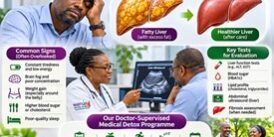
- Constant tiredness or low energy
- Brain fog and poor concentration
- A dull ache or feeling of fullness in the upper right side of the belly
- Weight gain around the waist that is hard to shift
- Dark, velvety patches of skin on the neck or armpits (a sign of insulin resistance)
- Sugar cravings and energy crashes after meals
Are you at higher risk?
Ask yourself these questions. The more you answer “yes”, the more important it is to get checked:
- Is your waist more than 94 cm (men) or 80 cm (women)?
- Do you have type 2 diabetes or prediabetes?
- Do you have high blood pressure or high cholesterol?
- Do you drink alcohol most days of the week?
- Do you often drink soft drinks, malt drinks, or sweetened juices?
- Do you sit for most of the day with little exercise?
- Do you have polycystic ovary syndrome (PCOS) or sleep apnoea?
- Do you regularly take herbal mixtures or “bitters” without medical advice?
- Does diabetes or liver disease run in your family?
Remember: you do not have to be overweight to have fatty liver. Slim people with belly fat or high blood sugar can have it too.
How Fatty Liver Is Diagnosed
Because symptoms are vague, doctors usually diagnose fatty liver through simple tests. At Martlife, a liver health assessment typically includes:
| Test | What it shows |
| Liver function tests (ALT, AST, GGT) | Whether liver cells are stressed or inflamed. Note: these can be normal even when fat is present. |
| Fasting blood sugar and HbA1c | Diabetes, prediabetes and insulin resistance |
| Lipid profile | Cholesterol and triglyceride levels |
| Abdominal ultrasound | Fat in the liver and the liver’s size and texture |
| Fibrosis scores (e.g. FIB-4) and elastography, where needed | Whether scarring has started, and how much |
| Waist, weight and blood pressure | Your overall metabolic risk |
These results tell us not just whether you have fatty liver, but how far it has gone. That shapes the right treatment plan for you.
How a Medical Detox Helps Your Liver Recover
Medical detox vs. “detox” teas and juice cleanses
Your liver is your body’s main detox organ. It does not need to be “flushed” with teas, herbal mixtures, or week-long juice fasts. In fact, some unregulated herbal products can harm the liver, and crash diets can make fatty liver worse.
A medical detox is different. It is a structured, doctor-supervised program that removes the things overloading your liver and gives it what it needs to repair itself. It’s evidence-based, tailored to your test results, and monitored over time.
The science is encouraging. Clinical guidelines show that losing about 5% of body weight can reduce liver fat. Losing 7–10% can calm liver inflammation, and losing 10% or more can even begin to reverse early scarring.
What the Martlife program involves
At Martlife Detox Clinic, located within the Medical Art Center in Lagos, your program is built around your own assessment:
- Full medical assessment. We start with the tests above, a review of your medicines and supplements, and a frank conversation about alcohol, diet, sleep, and stress.
- Removing the load. We help you cut back on alcohol, sugary drinks, and ultra-processed foods. We also review unnecessary medicines and unregulated herbal products.
- Liver-friendly nutrition plan. A practical, Nigerian-food-friendly eating plan that reduces liver fat without starving you. Think more vegetables, beans, fish, and whole grains, and fewer refined carbohydrates and fried foods.
- Blood sugar and metabolic control. Where needed, our doctors treat insulin resistance, diabetes, blood pressure, and cholesterol, the main drivers of fatty liver.
- Movement that fits your life. A realistic activity plan, because regular exercise reduces liver fat even before you lose weight.
- Sleep and stress support. Better sleep and lower stress hormones improve blood sugar control and energy levels.
- Monitoring and follow-up. We repeat key tests to track your liver’s progress and adjust the plan as you improve.
What results can you expect?
Every patient is different, but many people notice better energy, clearer thinking, and fewer cravings within a few weeks of consistent changes. Liver fat, blood tests, and waist size usually improve over the following months. The earlier you start, the more damage you can reverse.
7 Daily Habits That Help Your Liver Heal
You can start supporting your liver today:
- Swap sugary drinks for water. Soft drinks, malt drinks, and sweetened juices are among the biggest drivers of liver fat.
- Cut back on alcohol, or stop completely if you already have fatty liver.
- Fill half your plate with vegetables. Add beans, lentils, fish, and lean proteins, and cut back on white bread, white rice, and fried foods.
- Move for 30 minutes a day. Brisk walking counts. Aim for at least 150 minutes a week.
- Sleep 7–8 hours a night, and get checked if you snore loudly or wake up gasping.
- Enjoy coffee in moderation. Plain, unsweetened coffee is linked to lower liver fat and scarring.
- Don’t self-medicate. Avoid unregulated herbal mixtures and high doses of painkillers such as paracetamol without medical advice.
When to See a Doctor Urgently
Seek medical care straight away if you notice:
- Yellowing of the eyes or skin (jaundice)
- Swelling of the belly or legs
- Vomiting blood, or black, tarry stools
- Confusion, extreme drowsiness, or unusual behavior
- Easy bruising or bleeding
These can be signs of advanced liver disease and need prompt specialist attention, not a detox program.
Frequently Asked Questions
Can fatty liver really cause fatigue? Yes. Fatigue is the most common symptom of fatty liver. It is caused by insulin resistance, inflammation, unstable blood sugar, and poor sleep linked to the condition.
Is fatty liver reversible? In its early stages, yes. With weight loss, better nutrition, less alcohol, and treatment of blood sugar and cholesterol, liver fat can drop significantly and early scarring can improve.
Can I have fatty liver if I don’t drink alcohol? Yes. The most common type, MASLD, is driven by metabolism, diet, and lifestyle, not alcohol.
Do detox teas or liver cleanses work? There is no good evidence that they reverse fatty liver, and some herbal products can damage the liver. A doctor-supervised medical detox is the safer, evidence-based option.
How long does a medical detox for fatty liver take? Most programs run over several weeks, with follow-up over months. Your plan depends on your test results and goals.
Can my liver tests be normal even if I have fatty liver? Yes. Many people with fatty liver have normal liver enzymes. An ultrasound and a full metabolic check give a clearer picture.
Take Back Your Energy: Book a Liver Health Assessment
If you are always tired and can’t explain why, your liver may be asking for help. Fatty liver is silent, but it is not untreatable. The sooner it is found, the easier it is to reverse.
At Martlife Detox Clinic, within the Medical Art Center in Lagos, our medical team offers a complete liver health assessment and a personalized, doctor-led detox program to help you feel like yourself again.
Book your liver health assessment today. [Contact +2348133614695
/https://medicalartcenter.com/book-appointment/k]
This article is for general information and does not replace personal medical advice. Please speak with a doctor before making major changes to your diet, medicines, or alcohol use.