How Zinc, Selenium, and Other Essential Minerals Boost Fertility
When couples embark on the journey to parenthood, the focus often falls on hormones, ovulation, sperm count, and assisted reproductive technologies (ART) like IVF. However, healthy conception also relies on something far smaller: micronutrients.
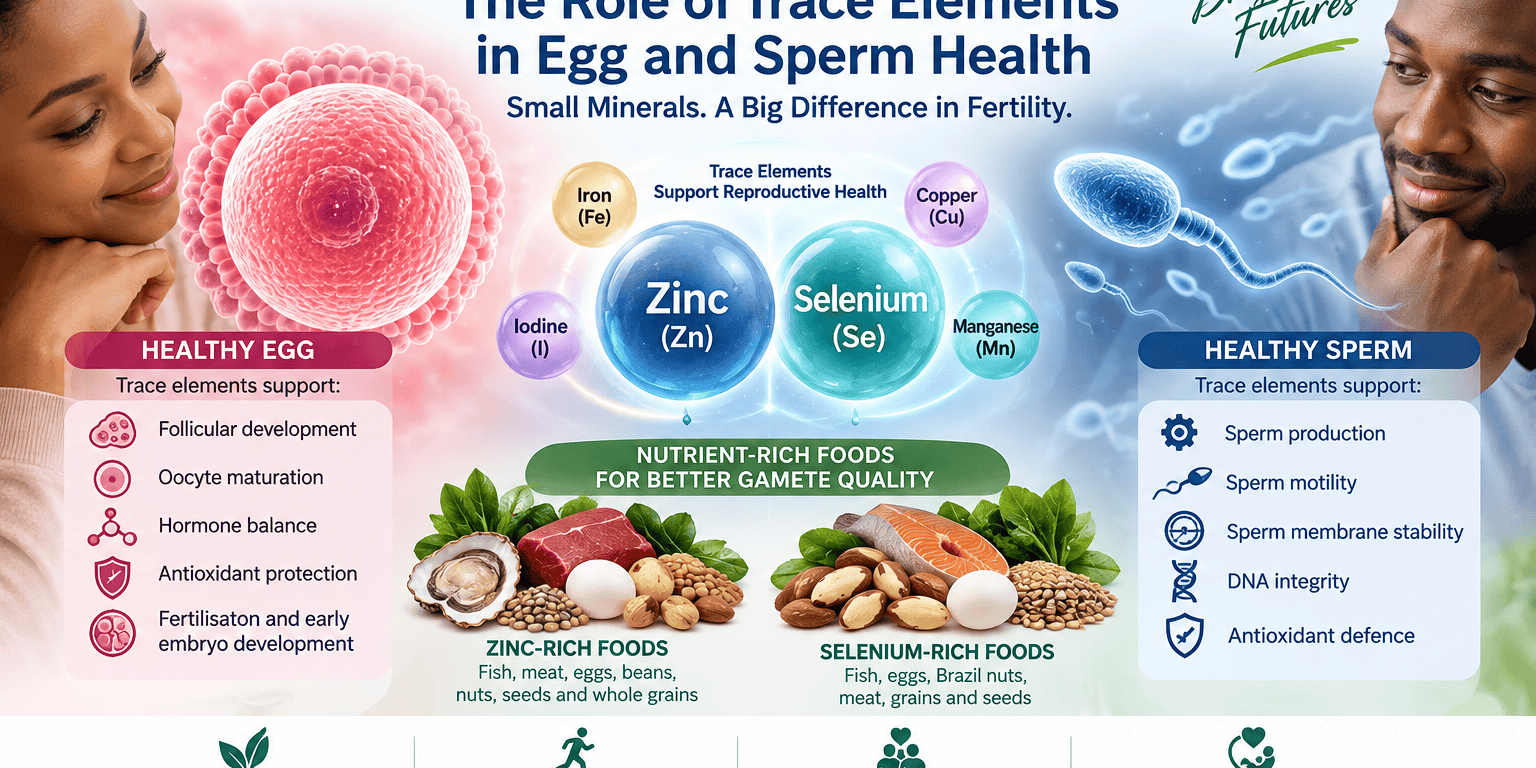
Trace elements are minerals the body needs in tiny amounts, yet they silently drive hundreds of biological processes. Zinc and selenium are among the most critical for reproductive health. These nutrients support cell division, antioxidant defense, DNA integrity, and hormone function—all vital for healthy egg and sperm development.
However, many people think “more is better.” In the world of micronutrients, this is rarely true. Both deficiency and excessive supplementation can be detrimental.
For couples trying to conceive naturally or through ART, the goal isn’t simply to take more supplements. The goal is to achieve optimal nutritional balance through a wholesome diet and medically appropriate assessment.
What Are Trace Elements?
Trace elements, or trace minerals, are essential nutrients the body requires in small quantities to function correctly. They are the spark plugs of our biological engine.
Key examples include:
- Zinc
- Selenium
- Iron
- Copper
- Iodine
- Manganese
Despite their small required amounts, these nutrients drive fundamental reproductive processes. A well-nourished reproductive system relies on these minerals to support:
- Egg Development and Maturation: Ensuring the oocyte is ready for fertilization.
- Sperm Production & Motility: Building healthy sperm cells and powering their movement.
- DNA Synthesis and Repair: Protecting the genetic material passed to offspring.
- Hormone Production: Balancing the endocrine system for ovulation and spermatogenesis.
- Antioxidant Defense: Fighting oxidative stress that can damage gametes.
- Fertilization and Embryo Development: Supporting the earliest stages of life.
Zinc and Female Fertility: Nurturing Healthy Eggs
Zinc is an absolute cornerstone of female reproduction. Its role spans from early ovarian follicle development to fertilization.
- Oocyte Maturation: Research shows that zinc is crucial for follicular development and oocyte (egg) maturation. The egg requires a specific zinc “spark” to progress through its final stages of development.
- The “Zinc Spark” at Fertilization: One of nature’s most fascinating events occurs when a sperm successfully fuses with an egg. The egg responds by releasing a rapid burst of zinc ions—a beautiful biological event known as the “zinc spark.” This release is critical for egg activation and helps modify the egg’s outer layer (zona pellucida) to prevent fertilization by multiple sperm.
What happens if zinc is inadequate?
A zinc deficiency can interrupt normal oocyte maturation, potentially leading to poor egg quality or anovulation. However, this does not mean that taking massive doses of zinc will magically improve egg quality. The relationship is a delicate balance: adequate zinc is necessary, while excessive zinc can be counterproductive.
Zinc and Male Fertility: Powering Sperm Production
For men, zinc is a superstar. It is found in high concentrations in seminal fluid and plays a multifaceted role in male fertility.
Zinc contributes to:
- Spermatogenesis: The active process of sperm cell formation.
- Sperm Maturation & Membrane Stability: Helping sperm develop properly and maintain their structural integrity.
- Sperm Motility: Providing the energy sperm need to swim effectively.
- Chromatin Stability: Protecting the integrity of the sperm’s DNA.
- The Acrosome Reaction: The essential process that allows the sperm to penetrate the egg’s outer layer.
- Antioxidant Defense: Protecting sperm from oxidative damage.
Studies show that men with lower seminal zinc levels often have poorer sperm parameters. Sperm cells are highly vulnerable to oxidative stress because their membranes contain large amounts of polyunsaturated fatty acids. Excessive reactive oxygen species (ROS) can damage these membranes, impairing motility and increasing DNA fragmentation. Zinc is a critical shield in this cellular defense system.
Selenium: The Master Antioxidant Mineral
Selenium is another essential trace mineral that profoundly affects reproductive health. Its primary role is as a building block for selenoproteins—proteins that are crucial for antioxidant defense and redox regulation.
- The Guardian of Sperm Cells: Selenium is integral to the enzyme glutathione peroxidase, a powerful cellular antioxidant. For sperm, this is vital because oxidative stress can negatively impact:
- Sperm membranes and mitochondrial function
- Sperm motility and morphology
- Sperm DNA integrity
- The Selenium-Sperm Connection: Research suggests that selenium status is strongly linked to sperm quality. It also supports sperm development and maturation.
- Selenium and Egg Health: For women, selenium contributes to the antioxidant environment needed for normal oocyte development. A healthy ovarian follicle requires robust antioxidant protection to shield the egg from oxidative processes that can impair quality.
A Crucial Caveat: While selenium supports reproductive biology, supplementation is not a guaranteed “cure” for infertility. Clinical trials have produced mixed results. If you are deficient, correcting that deficiency is beneficial; however, taking high-dose selenium without a proven need is not recommended and can be dangerous.
The Hidden Danger: Can Too Much Zinc or Selenium Harm Fertility?
Yes, absolutely.
This cannot be overstated. The line between essential nutrient and toxic element is perilously thin.
- Excess Zinc: Long-term, high-dose zinc consumption can interfere with copper absorption (leading to copper deficiency), cause nausea, and compromise the immune system.
- Excess Selenium: Selenium toxicity (selenosis) can cause gastrointestinal issues, neurological symptoms, hair and nail changes, and serious systemic complications.
The takeaway is clear: More minerals do not automatically mean better fertility. The objective is adequacy and balance, not megadosing.
Where Can You Get Zinc and Selenium Naturally?
For most people, food should always be the primary source of essential micronutrients. Here is how to incorporate them into a delicious, fertility-friendly Nigerian diet.
Zinc-Rich Foods
- Animal Sources (Highly Bioavailable): Fish (like mackerel and croaker), seafood (shrimp, oysters), eggs, meat (beef, goat), and poultry.
- Plant Sources: Beans, lentils, nuts (groundnuts), seeds (pumpkin seeds), whole grains, and dairy products.
Nigerian Diet Ideas:
- Breakfast: Eggs with whole-grain bread and sautéed vegetables.
- Lunch: Beans porridge with fish and a side of leafy greens (like Ugu or spinach).
- Dinner: Brown rice or Ofada rice with a hearty stew of meat, fish, and leafy vegetables.
- Snack: A small portion of groundnuts or mixed nuts.
Selenium-Rich Foods
Selenium content varies based on the soil in which crops are grown, making a varied diet essential.
Dietary Sources Include:
- Fish and Seafood
- Eggs
- Meat and Poultry
- Dairy Products
- Cereals and Grains
- Nuts and Seeds (Brazil nuts are exceptionally high in selenium)
How Much Is Enough? Understanding Intake Guidelines
Disclaimer: These are general guidelines, not medical prescriptions.
- Zinc: The recommended dietary allowance (RDA) is approximately 8 mg/day for adult women and 11 mg/day for adult men. The Tolerable Upper Intake Level is 40 mg/day.
- Selenium: The RDA for adults is 55 micrograms (mcg) per day. The Tolerable Upper Intake Level is 400 mcg/day.
Your needs may differ based on diet, medical conditions, or other factors. Always consult a professional.
Should Men and Women Have Their Mineral Levels Tested?
Not everyone requires extensive micronutrient testing. However, a nutritional assessment is wise if you have risk factors for deficiencies, such as:
- Restricted diets (e.g., veganism).
- Gastrointestinal absorption problems.
- Unexplained fertility challenges.
A Crucial Note on Testing: A “normal” mineral level does not guarantee “normal” egg or sperm quality. Likewise, correcting a deficiency is not a standalone fertility treatment. Trace elements are supporting factors within a much larger biological picture.
A Practical Guide to a Fertility-Friendly Nigerian Plate
Instead of obsessing over individual nutrients, build your meals around this visual guide:
- ½ Plate: Vegetables: Focus on local, nutrient-dense options like Ugu, Ewedu, Okra, Spinach, Tomatoes, and Peppers.
- ¼ Plate: Protein: Include fish, eggs, chicken, lean meat, beans, or lentils.
- ¼ Plate: Whole Carbs: Choose complex carbohydrates like brown rice, oats, sweet potatoes, or whole grains.
Add healthy fats from avocado, nuts, or seeds in appropriate portions.
Five Practical Ways to Support Egg and Sperm Health
- Eat a Varied Diet: No single food holds the key. Prioritize color and variety.
- Reduce Processed Foods: Limit highly processed foods, which often displace nutrient-dense options.
- Include Mineral-Rich Foods Regularly: Make fish, eggs, beans, nuts, and leafy greens staples.
- Avoid Unnecessary Megadoses: Do not self-prescribe high-dose supplements. More is not always better.
- Discuss Nutrition with Your Doctor: Speak with a fertility specialist before starting any high-dose supplement regimen, especially if you are preparing for IVF or have abnormal test results.
The Bigger Picture: Nutrition Is Part of the Fertility Equation
A complex network of systems—age, genetics, hormones, metabolism, and lifestyle —influences egg and sperm health.
Trace elements like zinc and selenium are critical because they support the biological pathways that govern metabolism → antioxidant defense → DNA integrity → gamete development → fertilization.
But they do not work in isolation. Good fertility nutrition creates the optimal environment for reproductive health.
When Should You Seek Fertility Advice?
- You have been trying to conceive without success (over 12 months if under 35, or over 6 months if over 35).
- A semen analysis has shown abnormal results.
- You have irregular or absent ovulation.
- You have a known reproductive condition (e.g., PCOS, Endometriosis).
- You have experienced recurrent pregnancy loss.
- You are considering IVF or another ART treatment.
- You are concerned about your nutritional status.
A personalized fertility assessment can help identify the factors affecting your reproductive potential and determine the most effective interventions.
Final Takeaway
Zinc and selenium are small nutrients with enormous biological roles in reproduction. They support everything from egg maturation to sperm function and antioxidant defense.
However, the goal is not to consume as many minerals as possible. The goal is nutritional balance.
A varied, nutrient-dense diet, combined with appropriate medical evaluation, forms a stronger foundation for fertility than indiscriminate supplementation.
At Medical Art Center, we believe in a whole-person approach to fertility care. We combine world-class reproductive medicine with in-depth laboratory assessment, lifestyle management, antioxidant infusion therapy, and individualized treatment planning to help you achieve your family-building goals.
Healthy nutrition supports reproductive health. When needed, expert fertility care helps determine next steps.
Medical Disclaimer
This article is for educational purposes only and does not replace individual medical advice. Do not take zinc, selenium, or other supplements in high doses without professional guidance. If you are experiencing infertility or preparing for IVF, consult a qualified fertility specialist for personalized assessment and treatment.
tive health. [Book a Consultation]