The Role of Trace Elements in Body Functions
By: Dr Kofo Eseigbe, Mart Life Detox Clinic.
Introduction: The Mighty Micronutrients
When we think about nutrition, carbohydrates, proteins, fats, and vitamins usually take center stage. But hidden in the shadows are some of the most powerful nutrients your body needs—and they’re required in surprisingly tiny amounts.
These are trace elements.
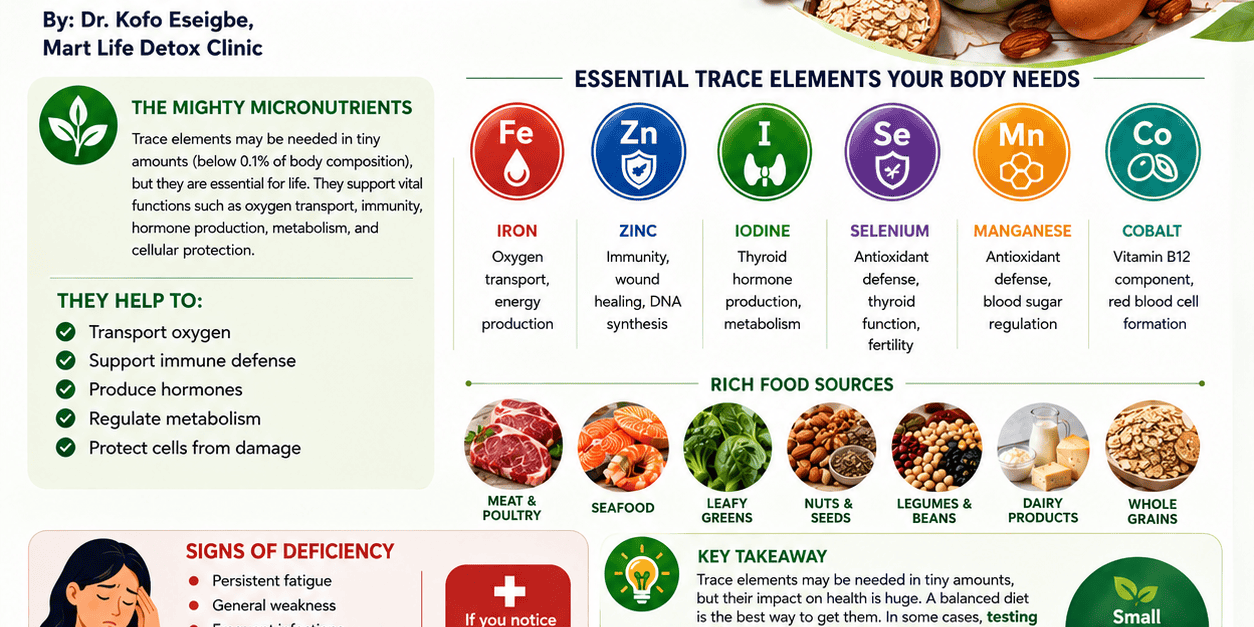
Though they make up less than 0.1% of your body’s total composition, essential trace elements are anything but insignificant. They drive critical processes like oxygen transport, immune defense, hormone production, metabolism, and cellular protection. Without them, your body simply cannot function optimally.
The good news? Most people can obtain sufficient trace elements through a balanced diet rich in meat, seafood, vegetables, nuts, grains, and dairy. However, certain health conditions, medications, lifestyle factors, and environmental exposures can increase your risk of deficiency—sometimes necessitating supplementation.
In this comprehensive guide, we’ll explore:
- What trace elements are and why they matter
- The essential trace elements your body needs
- Their specific benefits and functions
- Signs of deficiency to watch for
- When supplementation may be helpful
What Are Trace Elements?
Trace elements are minerals found in the body in extremely small quantities—yet they are absolutely essential for maintaining normal biological functions.
Some trace elements are classified as nutritionally essential, meaning the body cannot produce them and must obtain them from dietary sources. These include:
| Trace Element | Key Role |
| Iron | Oxygen transport, energy production |
| Zinc | Immunity, wound healing, DNA synthesis |
| Iodine | Thyroid hormone production, metabolism |
| Selenium | Antioxidant defense, thyroid function, fertility |
| Manganese | Antioxidant defense, blood sugar regulation |
| Cobalt | Vitamin B12 component, red blood cell formation |
Although these elements are needed only in trace amounts, a deficiency in any of them can interfere with vital body processes and significantly impact your overall health.
Iron: The Oxygen Carrier
Although we often think of iron as a metal, it is also an essential nutrient found in every cell of your body.
What Does Iron Do?
Iron’s most critical function is in your blood, where it enables oxygen transport to tissues throughout the body.
- Approximately 70% of your body’s iron is found in hemoglobin—the protein in red blood cells responsible for carrying oxygen from your lungs to your organs and tissues.
- Iron is also present in myoglobin, a protein in skeletal muscles and the heart that stores oxygen and releases it during physical activity.
When iron levels drop, your body cannot deliver enough oxygen to tissues. This reduces energy production and can impair normal organ function, tissue repair, and physical performance.
Food Sources of Iron
Include these iron-rich foods in your diet:
- Lean beef, lamb, and liver
- Poultry: Chicken and turkey
- Seafood: Fish and shellfish
- Plant-based sources: Green leafy vegetables, tofu, tomatoes, lima beans, potatoes, green beans, corn, cabbage
- Legumes: Beans and lentils

The Role of Trace Elements in Body Functions
Signs of Iron Deficiency
Iron deficiency is the most common nutritional deficiency worldwide. Watch for these warning signs:
| Common Symptoms | Severe Symptoms |
| Persistent tiredness and fatigue | Shortness of breath |
| General weakness | Dizziness or light-headedness |
| Reduced exercise tolerance | Fainting |
| Muscle weakness | Pale skin |
Severe iron deficiency can progress to iron deficiency anemia—a condition where your blood lacks enough healthy red blood cells to transport oxygen effectively.
Zinc: The Cellular Protector
Zinc is a multitasking mineral involved in numerous processes throughout your body.
What Does Zinc Do?
- Immune system function – helps your body fight infections
- Wound healing – accelerates tissue repair
- Growth and development – essential during childhood and pregnancy
- Nutrient absorption – supports digestive health
- Brain and nervous system function – cognitive health
Zinc and Cellular Health
Zinc plays a crucial role in programmed cell death (apoptosis) —a natural process that removes damaged, abnormal, or potentially harmful cells before they can multiply. When zinc levels are low, this protective mechanism may fail, allowing damaged cells to survive and divide when they should be eliminated. This disruption has been associated with cancer development.

The Role of Trace Elements in Body Functions
Zinc and Oxidative Stress
Zinc also protects your cells by helping your body manage oxidative stress. This occurs when harmful molecules called free radicals accumulate faster than your body’s antioxidant systems can neutralize them.
These free radicals can damage:
- DNA – increasing mutation risk
- Proteins – impairing cellular function
- Cell membranes – compromising cell integrity
Over time, repeated cellular damage can contribute to mutations and increase your risk of chronic diseases, including:
- Cancer
- Alzheimer’s disease
- Parkinson’s disease
- Amyotrophic lateral sclerosis (ALS)
- Cardiovascular disease
- Diabetes
Zinc reduces oxidative stress by supporting antioxidant enzymes and stabilizing cell membranes, limiting the damage caused by free radicals.
Food Sources of Zinc
Include these zinc-rich foods in your diet:
- Meat and poultry
- Seafood (especially shellfish like oysters)
- Eggs and dairy products
- Beans and lentils
- Nuts and seeds
- Whole grains
Iodine: The Thyroid’s Best Friend
Iodine is best known for its critical role in supporting the thyroid gland—the small, butterfly-shaped organ in your neck that controls many vital body functions.
What Does Iodine Do?
Your thyroid uses iodine to produce two essential hormones:
| Hormone | Abbreviation | Function |
| Triiodothyronine | T3 | Regulates metabolism, energy production |
| Thyroxine | T4 | Supports growth, brain development |
These thyroid hormones regulate:
- Metabolism – how your body converts food into energy
- Energy production – cellular energy synthesis
- Growth and development – physical and neurological development
- Brain function – cognitive performance and mood
Signs of Iodine Deficiency
When iodine intake is too low, your thyroid cannot produce enough hormones, potentially leading to hypothyroidism. Your thyroid may enlarge in an attempt to compensate, causing goiter—a visible swelling in the neck.

The Role of Trace Elements in Body Functions
Other deficiency symptoms include:
- Weight gain – slowed metabolism
- Persistent fatigue – low energy production
- Dry skin – reduced cellular hydration
- Hair loss – impaired follicle health
- Feeling unusually cold – poor temperature regulation
- Constipation – slowed digestive function
- Slowed physical and mental activity – reduced cognitive speed
Iodine During Pregnancy and Childhood
Iodine is especially critical during pregnancy and early childhood because thyroid hormones are essential for brain development. Severe iodine deficiency during these stages can result in:
- Impaired learning ability
- Delayed growth
- Hearing problems
- Neurological developmental issues
Food Sources of Iodine
- Seafood – fish and shellfish
- Seaweed – kelp, nori, kombu
- Dairy products – milk, cheese, yogurt
- Eggs
- Iodized salt
Selenium: The Antioxidant Powerhouse
Selenium works closely with iodine to support healthy thyroid function and hormone metabolism. It also serves as a powerful antioxidant that helps neutralize harmful free radicals, protecting your cells from damage and supporting healthy aging.
Selenium and Reproductive Health
Selenium plays a significant role in fertility for both men and women.
| In Men | In Women |
| Supports sperm production | Supports thyroid function for ovulation |
| Enhances sperm quality | Contributes to healthy fetal growth |
| Improves sperm motility | May reduce risk of pregnancy complications |
| Protects sperm cells from oxidative damage | Supports baby’s immune and nervous system development |
Low selenium levels during pregnancy have been associated with complications such as:
- Miscarriage
- Premature birth
- Impaired development of the baby’s immune and nervous systems
Food Sources of Selenium
- Brazil nuts – one of the richest sources
- Seafood – fish and shellfish
- Eggs
- Poultry and lean meat
- Dairy products
- Whole grains
- Mushrooms
- Sunflower seeds
Manganese: The Metabolic Regulator
Manganese helps protect your body against oxidative stress and inflammation—two processes linked to metabolic diseases such as:
- Type 2 diabetes
- Obesity
- Atherosclerosis
- High cholesterol
- Non-alcoholic fatty liver disease (NAFLD)
What Does Manganese Do?
Manganese supports important enzymes involved in:
- Antioxidant defense – protects cells from damage
- Carbohydrate metabolism – energy from food
- Fat metabolism – lipid processing
- Protein production – tissue building
- Hormone regulation – endocrine balance
- Immune function – disease defense
Manganese also contributes to healthy blood sugar regulation by supporting normal insulin production and activity.
Food Sources of Manganese
- Almonds and hazelnuts
- Seeds (pumpkin, sesame, sunflower)
- Whole grains (oats, brown rice, quinoa)
- Beans and lentils
- Green leafy vegetables
Cobalt: The Vitamin B12 Connector
Cobalt is a trace element that is primarily important because it forms an essential part of vitamin B12 (cobalamin).
What Does Cobalt Do?
Vitamin B12 is critical for:
- DNA production – cellular replication
- Energy metabolism – converting food into energy
- Formation of healthy red blood cells – preventing anemia
Signs of Cobalt/Vitamin B12 Deficiency
Cobalt deficiency itself is uncommon because your body requires very small amounts. However, inadequate cobalt availability can affect vitamin B12 function and may contribute to:
- Poor appetite
- Certain types of anemia (megaloblastic anemia)
Food Sources of Cobalt
- Green vegetables
- Meat and poultry
- Dairy products
- Seafood
- Eggs
- Spices
- Drinking water (varies by source)
The Role of Trace Elements in Body Functions
How Do You Know If You’re Deficient in a Trace Element?
Trace element deficiencies can be difficult to recognize because symptoms are often mild and may overlap with other health conditions.
Common Warning Signs
If you’re experiencing any of the following, a trace element deficiency could be a contributing factor:
| Symptom | Possible Deficiency |
| Persistent fatigue | Iron, Zinc, Iodine |
| General weakness | Iron, Selenium |
| Frequent infections | Zinc, Selenium |
| Poor wound healing | Zinc |
| Changes in skin, hair, or nails | Zinc, Iodine, Selenium |
| Changes in appetite | Zinc, Cobalt |
| Difficulty concentrating | Iron, Iodine |
| Reduced physical performance | Iron, Manganese |
Important: These symptoms do not always mean you have a trace element deficiency. Many different medical conditions can produce similar symptoms.

The Role of Trace Elements in Body Functions
Getting Tested
If you suspect a deficiency, consult a healthcare professional who can:
- Review your symptoms – comprehensive health assessment
- Evaluate your diet – nutritional analysis
- Assess your medical history – identify risk factors
- Order appropriate blood tests – confirm deficiency status
Finding the underlying cause is essential—replacing the nutrient alone may not solve the problem if there’s an ongoing issue affecting absorption or causing nutrient loss.
Should You Take Trace Element Supplements?
Although trace elements are essential, your body only needs them in small amounts. Taking more than the recommended amount does not provide extra benefits—and may sometimes be harmful.
Risks of Excessive Intake
Excessive trace element intake can:
- Cause toxicity – mineral poisoning
- Interfere with absorption of other essential nutrients
- Disrupt normal body processes – metabolic imbalances
When Are Supplements Recommended?
Supplements are generally recommended when there is:
| Indication | Example |
| Confirmed deficiency | Blood test confirmation |
| Increased nutritional requirements | Pregnancy, breastfeeding, growth periods |
| Medical condition affecting absorption | Inflammatory bowel disease, celiac disease |
| Excessive nutrient loss | Heavy menstrual bleeding, chronic diarrhea |
Golden Rule: Do not self-prescribe trace element supplements. Most healthy individuals can obtain sufficient amounts through a balanced diet. If supplements are needed, they should be taken under professional medical supervision.
Who May Be at Higher Risk of Deficiency?
Certain situations can increase your risk of trace element deficiencies:
| Risk Factor | How It Affects You |
| Heavy menstrual bleeding | Conditions like uterine fibroids can cause significant blood loss, increasing iron deficiency risk |
| Digestive disorders | Long-term diarrhea, vomiting, or inflammatory bowel disease can reduce mineral absorption |
| Certain medications and chronic illnesses | Some medicines and long-term conditions affect how your body absorbs, stores, or uses essential nutrients |
| Pregnancy and breastfeeding | Increased nutritional demands |
| Restrictive diets | Vegan, vegetarian, or limited dietary patterns |
In these cases, targeted supplementation under medical guidance may be needed.
How Mart Life Can Help Identify and Correct Trace Element Deficiencies
At Mart Life Detox Clinic, we go beyond symptoms to assess your nutritional status comprehensively.
Our Assessment Approach
We use bioenergetic testing—a non-invasive wellness assessment that evaluates how your body responds to the energetic signatures of:
- Nutrients – identify imbalances
- Toxins – assess exposure levels
- Organ systems – evaluate physiological stress
The results help identify:
- Areas of physiological stress
- Potential nutrient imbalances
- Deficiencies in essential trace elements
- Other factors affecting your overall well-being
This information is then used to develop a personalized wellness plan tailored to your unique needs.

https://medicalartcenter.com/2026/03/09/a-day-in-the-life-at-mart-life-detox/
Note: Bioenergetic testing is intended to complement, not replace, conventional medical assessment and laboratory testing.
Our Treatment Approach
Where clinically appropriate, identified nutrient deficiencies can be addressed with intravenous (IV) nutrient infusions.
Benefits of IV Therapy:
- Bypasses the digestive tract for rapid absorption
- Delivers vitamins, minerals, and antioxidants directly into the bloodstream
- Provides targeted nutrient replenishment
- Supports cellular function, energy production, immune health, and recovery
Ready to Take Control of Your Health?
If you’ve been struggling with:
- Persistent fatigue
- Low energy
- Poor immunity
- Unexplained symptoms
Or simply want to optimize your overall well-being, we’re here to help.
Book a consultation with Mart Life Detox Clinic today. Our personalized assessment can identify nutritional imbalances and guide you toward a healthier, more balanced lifestyle.
Contact Us
📞 Phone: +2347075066718, +2348103251336
🌐 Web: www.medicalartcenter.com/mart-life-detox-clinic/
Your health is our priority. Let’s work together to unlock your body’s full potential.
Summary Table: Essential Trace Elements at a Glance
| Trace Element | Key Functions | Best Food Sources | Deficiency Signs |
| Iron | Oxygen transport, energy production | Red meat, poultry, fish, leafy greens, beans | Fatigue, weakness, shortness of breath |
| Zinc | Immunity, wound healing, DNA synthesis | Meat, seafood, eggs, nuts, beans | Frequent infections, poor healing, hair loss |
| Iodine | Thyroid hormone production, metabolism | Seafood, seaweed, dairy, eggs, iodized salt | Weight gain, fatigue, goiter |
| Selenium | Antioxidant defense, thyroid function, fertility | Brazil nuts, seafood, eggs, poultry, grains | Fertility issues, fatigue, impaired immunity |
| Manganese | Antioxidant defense, blood sugar regulation | Nuts, seeds, whole grains, beans, leafy greens | Metabolic issues, blood sugar dysregulation |
| Cobalt | Vitamin B12 component, red blood cell formation | Green vegetables, meat, dairy, seafood, eggs | Anemia, poor appetite |