Traction Force and Implantation: How Sperm’s Mechanics Matter
Quick answer: Implantation isn’t just a chemical conversation between the embryo and the womb. It is also a physical one. New research shows that human embryos pull, push, and remodel the uterine lining as they settle in. Sperm quality helps determine whether the embryo is strong enough to do this well.
What Is Implantation, and Why Does It Fail?
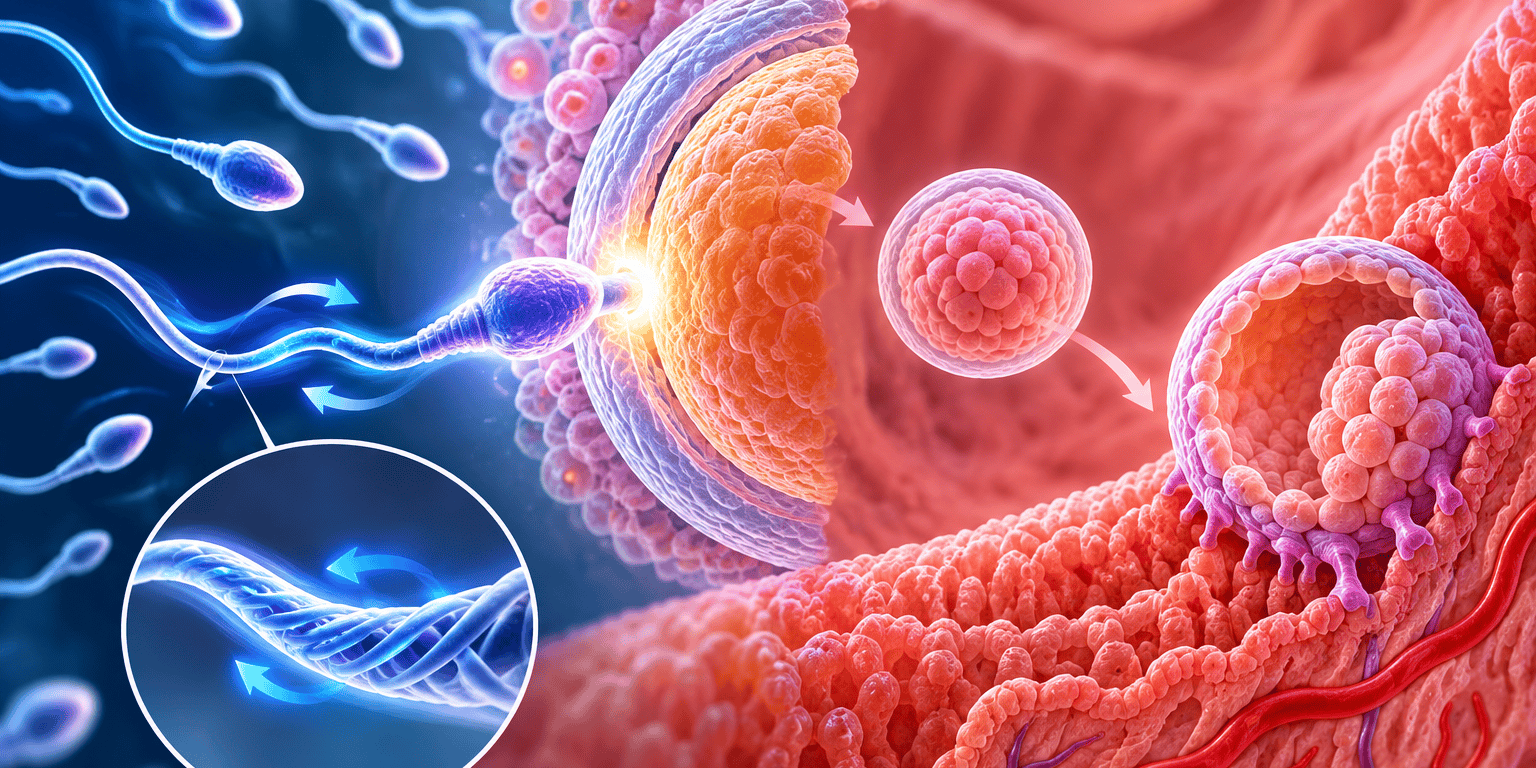
Implantation is the moment a week-old embryo attaches to the uterine lining (the endometrium) and begins burrowing in. Everything after it, including the placenta and the pregnancy itself, depends on this step going well.
It is also a common bottleneck. Many couples have healthy-looking embryos and a healthy-looking uterus, yet the embryo does not implant. For decades, research focused on hormones, genes, and immune signals. That work matters, but it leaves out a basic fact: implantation is a physical act.
The New Science: Embryos Apply Real Force
A 2025 study in Science Advances helped fill this gap. The authors noted that tissue invasion is fundamentally a mechanical process, yet most studies have focused on the biochemical and genetic aspects of implantation. To address this, the team built a deformable ex vivo platform to visualize traction during human embryo implantation. PubMed
In plain terms, they let embryos implant into a soft, gel-like scaffold and measured how the embryos moved it.
What they found
- Human embryos dig in. Human embryos insert into the matrix, generating multiple traction foci, which are several points of pulling force. Mouse embryos behave differently and mostly spread across the surface. PubMed
- Weaker force, weaker implantation. Implantation-impaired human embryos showed reduced displacement. They moved their surroundings less. PubMed
- Embryos respond to touch. When researchers applied external mechanical cues, human embryos recruited myosin and directed cell protrusions toward the stimulus. This is called mechanosensitivity, meaning the embryo senses physical signals and adapts. PubMed
A separate 2026 study in mouse embryos found that research on this mechanical dimension remains relatively scarce, which limits our understanding of conditions such as recurrent implantation failure and early pregnancy loss. The same group also explored whether traction force mapping could one day allow non-invasive assessment of embryos. PubMed Central
Why the Uterine Lining’s Stiffness Matters
Force works in both directions. The embryo pulls, and the tissue pulls back. Researchers have reported that these findings provide direct measurements of tissue stiffness during the window of implantation and the first trimester, giving scientists a baseline for future work. Other work suggests that uterine tissue stiffness is dynamically regulated during the implantation window. ResearchGate
Think of pressing a foot into wet sand versus packed clay. The same effort gives very different results depending on the ground. Timing, tissue condition, and embryo strength all interact.
So Where Does Sperm Come In?
Sperm do not generate traction force at implantation, and the studies above do not claim they do. Their role is upstream and just as important.
Half of the embryo’s genetic material and important cell-division machinery come from sperm. That means sperm quality can shape the embryo’s ability to grow, organize itself, and invade the uterine lining. Factors clinicians look at include:
- DNA integrity. High levels of sperm DNA damage are linked to poorer embryo development in fertility research.
- Motility and morphology. These influence fertilization and which sperm are suitable for treatments like ICSI.
- Lifestyle influences. Heat exposure, smoking, alcohol, infections, obesity, and chronic stress can all affect semen quality.
An embryo has to be strong enough to grip, pull, and invade. Healthy sperm help give it that start. This is why modern fertility care evaluates both partners, not just the uterus.
Note: Research has not yet established a specific mechanical link between sperm quality and embryo traction. It is a reasonable hypothesis and an active area of interest, not a proven cause.
What This Means for Couples Trying to Conceive
This research is early, and most of it was done in laboratory models. You cannot measure your own embryo’s traction force today. But it already supports several practical points:
- Implantation failure is not always “the uterus’s fault.” Embryo quality, uterine tissue, and timing all matter.
- Male factor deserves a full workup. A semen analysis, and where appropriate a DNA fragmentation test, is a sensible early step.
- Personalized timing may matter more. Understanding when the uterine lining is most receptive is a growing area of research.
- Better tools may be coming. Force-based assessment could one day complement how IVF selects embryos.
Steps You Can Take Now
- Get a semen analysis early, not late.
- Reduce heat exposure (hot tubs, prolonged laptop-on-lap use), avoid smoking, and limit alcohol.
- Keep a balanced diet, manage weight, and sleep well.
- If you have had two or more failed transfers or losses, ask about a structured evaluation of both partners.
Frequently Asked Questions
What is traction force in implantation?
It is the physical pulling and pushing an embryo applies to the uterine lining as it attaches and invades. Researchers measure it by watching how much the surrounding material moves.
What is mechanosensitivity?
It is a cell’s ability to sense physical cues such as stiffness or pressure and respond, for example, by reorganizing its internal structure.
Can sperm quality affect implantation?
Indirectly, yes. Sperm contribute genetic material and cell machinery to the embryo, so their quality can influence embryo development, which in turn affects implantation.
Can this research be used in IVF today?
Not yet. It is early-stage science. It does, however, point toward future embryo assessment and better models of implantation failure.
When should I see a fertility specialist?
Generally after 12 months of trying if under 35, after 6 months if 35 or older, or sooner with known risk factors or repeated pregnancy loss.
Talk to Medical Art Center Clinic
Understanding why implantation succeeds or fails is the first step toward better outcomes. If you are facing repeated implantation failure, unexplained infertility or concerns about male fertility, our team can help you plan the next step.
[Book a consultation with Medical Art Center Clinic →]
📍 Lofom House, 21 Mobolaji Bank Anthony Way, Maryland, Lagos
📞 +2348103251336 | +2347075066718
This article is for educational purposes and does not replace personalized medical advice.