
Gestational Surrogacy in Nigeria: A Retrospective Study from a Private Fertility Center
“Our babies, your uterus.”
A retrospective study on gestational surrogacy at a private fertility center in South West Nigeria
Authors: Mojisola M. Aderonmu, MBBS, FWACS, FMCOG; Adebisi N. Oyero, MBBS; Olaitan B. Shote, MBBS;
Chinelo G. Okonkwo, RN, BNSc; Oladapo A. Ashiru, MBBS, MS, PhD, HCLD/CC
Abstract
Introduction
This publication on Gestational Surrogacy in Nigeria highlights the experience and outcomes recorded at the Medical Art Center, Lagos. The study was recently featured in Global Reproductive Health.
In vitro fertilization (IVF), a major form of assisted reproductive technology, has advanced significantly over the last 30–50 years and now includes third-party reproductive solutions such as surrogacy.
There are two types of surrogacy:
-
Full/Gestational Surrogacy:
An egg from the intended mother (or donor) is fertilized with sperm, and the embryo is transferred into another woman (the gestational carrier). -
Partial/Traditional Surrogacy:
The surrogate provides the egg and also carries the pregnancy.
In Nigeria, despite growing practice, there are limited publications on surrogacy outcomes. The Medical Art Center practices only full (gestational) surrogacy.
Study Design
This was a retrospective descriptive study involving 61 surrogacy cycles conducted over 76 months (January 1, 2015 – April 30, 2021) at a single private fertility center in South West Nigeria.
Data were extracted from electronic medical records of the intended parents and gestational carriers.
Results
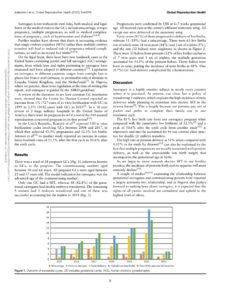
A total of 58 gestational carriers (GCs) participated in the program.
-
Miscarriages: 11 (19%)
-
Live births: 63
-
14 twin pairs (44%)
-
1 set of triplets (~5%)
-
Remaining deliveries were singletons
-
-
Complications:
One GC (1.7%) required a hysterectomy due to postpartum hemorrhage. -
Maternal mortality: None recorded
-
Common indications for surrogacy:
-
Recurrent failed IVF cycles
-
Uterine factor infertility
-
Advanced maternal age
-
Conclusion
Gestational surrogacy is a safe, effective, and valid assisted reproduction option for individuals and couples who require third-party reproductive support. Its continued practice should be guided by strong ethical, regulatory, and legal frameworks within Nigeria.
Background
Surrogacy allows individuals with uterine factor infertility, medical contraindications to pregnancy, or same-sex couples to have genetically related children.
Types of Surrogacy
-
Partial/Traditional Surrogacy:
The surrogate contributes her own egg. -
Complete/Gestational Surrogacy:
The surrogate carries an embryo genetically unrelated to her.
Major professional bodies (AFRH, ASRM, ESHRE) caution against partial surrogacy due to legal challenges. The Medical Art Center practices only gestational surrogacy.
Materials and Methods
Data reviewed included:
-
Age of intended parents and surrogates
-
Clinical indications for surrogacy
-
Treatment outcomes
-
Number of embryos transferred
-
Gestational age at delivery
-
Maternal complications
All data covered the period 2015–2021.
Literature Review
Surrogacy dates back to ancient times, including the biblical account of Abraham, Sarah, and Hagar. Modern medical and legal frameworks now exist to protect all parties involved.
Medical Risks for Gestational Carriers
-
Miscarriage
-
Ectopic pregnancy
-
Multiple gestation
-
Pregnancy complications such as hypertension and gestational diabetes
Evidence suggests that single embryo transfer (SET) reduces these risks and increases safe live births.
Legal Considerations
Globally, surrogacy laws vary widely:
-
Banned: France, Germany
-
Altruistic only: Canada, UK, Netherlands
-
Nigeria: No formal legislation; governed by AFRH guidelines
Global Trends
-
CDC reports an increase in IVF cycles involving gestational carriers from 1% in 1999 to 2.5% in 2013.
-
Studies worldwide show live birth rates between 32%–50%, depending on cycle number and clinical practice.
Detailed Study Results
-
58 gestational carriers became pregnant.
-
Surrogates were aged 25–37, while commissioning mothers ranged 30–64.
-
Only one GC received a single embryo transfer.
-
82.8% received double embryo transfers; the remainder received three embryos.
-
Triplet birth resulted from a transfer of three embryos.
-
Ultrasound confirmation occurred at 6–7 weeks.
-
All but one delivery occurred at the affiliated maternity center.
Live Birth Breakdown
-
Total live births: 63
-
Twins: 14 pairs (44%)
-
Triplets: 1 set (5%)
-
Singletons: 32 births
Preterm vs Term Births
-
Preterm births: 33 (52%)
-
Mostly due to multiple gestations
-
-
Term births: 30 (48%)
-
Complications:
-
1 hysterectomy due to postpartum hemorrhage
-
No fatalities
-
Discussion
Surrogacy remains a sensitive and emotionally charged topic worldwide. At our center, the policy of transferring two embryos explains the high rate of twin deliveries.
However, as we transition towards elective single embryo transfer (eSET), we expect:
-
Lower rates of multiple pregnancies
-
Fewer preterm births
-
Reduced complications for gestational carriers
Our 81% live birth rate is significantly higher than many published international outcomes (32%–50%). This may be due to embryo transfer practices and careful selection of gestational carriers.
Relationship studies show that most interactions between gestational carriers and intended parents remain positive and respectful.
As Nigeria moves toward developing clear surrogacy legislation, it is crucial that the rights and safety of all involved are protected through robust ethical guidelines.
Conclusion
Gestational surrogacy is a highly effective reproductive option for individuals and couples unable to carry a pregnancy. With appropriate ethical and regulatory support, it remains a safe and viable pathway to parenthood in Nigeria.