The Endometrium–Embryo Dialogue: The Science Behind the Implantation Window
SEO Title: The Endometrium–Embryo Dialogue: Understanding the Implantation Window
Meta Description (155 characters): Discover how the implantation window affects IVF success, endometrial receptivity, and embryo implantation with expert fertility care in Lagos.
Primary Keyword: Implantation window
Secondary Keywords: Endometrial receptivity, embryo implantation, recurrent implantation failure, IVF success, fertility treatment Lagos, ERA test Nigeria
URL Slug: endometrium-embryo-dialogue-implantation-window
The Endometrium–Embryo Dialogue: The Science Behind the Implantation Window
Every successful pregnancy begins with a remarkable biological conversation.
A healthy embryo alone is not enough. The uterus must also be ready to receive it during a brief period known as the implantation window. If the timing is even slightly off, implantation may fail—even when the embryo is genetically normal.
At Medical Art Center, Lagos, understanding this delicate dialogue between the embryo and the endometrium helps us personalize fertility treatment and improve IVF outcomes for couples experiencing recurrent implantation failure.
Hero Image
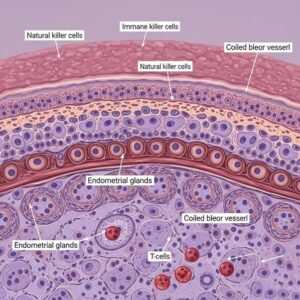
The Endometrium-Embryo Dialogue
What Is the Implantation Window?
The implantation window, also called the Window of Implantation (WOI), is the short period when the uterine lining becomes receptive to an embryo.
For most women, this occurs:
- 7–10 days after ovulation
- Lasts for about 24–48 hours
- Is controlled primarily by progesterone
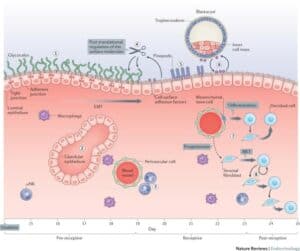
During this time, the endometrium changes from simply growing into a nutrient-rich tissue capable of supporting early pregnancy. This transformation is called decidualization.
Think of it like docking a spacecraft: The embryo can only land when the uterine “landing pad” is open. Outside this window, implantation is unlikely to occur.
Timeline Graphic
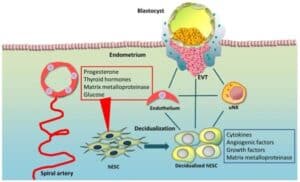
The Endometrium–Embryo Dialogue – the implantation process.
Why Timing Matters in IVF
In IVF, many patients wonder why excellent embryos sometimes do not implant.
The answer often lies in endometrial receptivity rather than embryo quality.
Even with a high-grade embryo, pregnancy cannot occur if:
- The implantation window opens too early
- The window opens too late
- The endometrium is inflamed or poorly receptive
- The immune environment is unfavorable
Research suggests that abnormal endometrial receptivity contributes to a significant proportion of unexplained implantation failures.
How the Embryo and Uterus Communicate
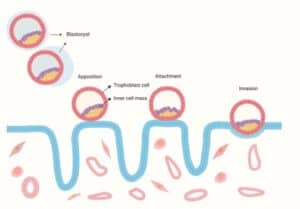
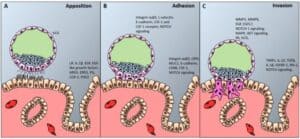
Implantation happens in three carefully coordinated stages. Each stage involves hormones, adhesion molecules, immune cells, and growth factors.
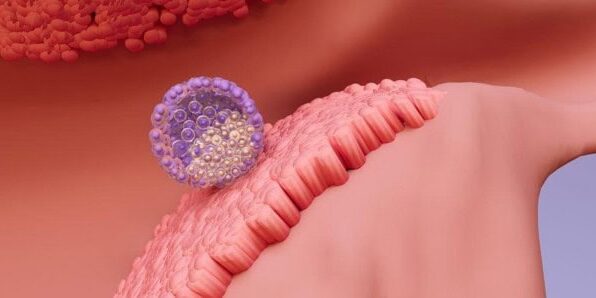
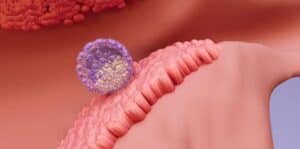
Stage 1: Apposition — The First Contact
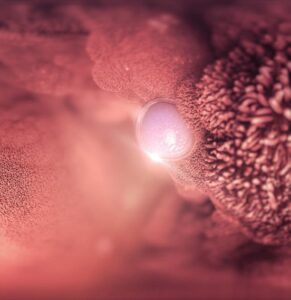
The embryo gently approaches the uterine lining and begins making temporary contact.
The Endometrium–Embryo Dialogue
The Endometrium–Embryo Dialogue
The Endometrium–Embryo Dialogue
Key molecules involved include:
- L-selectins – help the embryo recognize the uterine surface.
- MUC-1 – decreases during the receptive phase to allow attachment.
- Integrins – strengthen early adhesion between embryo and endometrium.
Stage 2: Attachment — Building a Strong Connection
Once contact is established, the embryo anchors itself securely.
The Endometrium–Embryo Dialogue
Important factors include:
- HB-EGF (Heparin-binding Epidermal Growth Factor) promotes attachment.
- Pinopodes, tiny mushroom-shaped projections, appear only during the receptive phase and are considered markers of uterine readiness.
Stage 3: Invasion — The Beginning of Pregnancy
The embryo then penetrates the endometrial tissue and begins forming the placenta.
The Endometrium–Embryo Dialogue- adhesion and invasion
This stage depends on:
- Cytokines
- VEGF (vascular growth factor)
- Prostaglandins
- Controlled remodeling of uterine tissue
Successful invasion establishes the blood supply that will nourish the developing baby.
The Immune System: Friend, Not Enemy
One of the greatest mysteries of pregnancy is why the mother’s immune system does not reject the embryo.
The answer is immune tolerance.
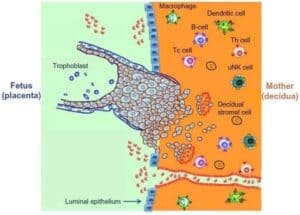
Uterine Natural Killer (uNK) Cells
Unlike circulating blood NK cells, uterine NK cells have a specialized role.
The Endometrium-Embryo Dialogue-Natural Killer cells
During implantation, they:
- Support blood vessel formation
- Release beneficial cytokines
- Guide placental development
- Help regulate tissue remodeling
Rather than attacking the embryo, these cells help create a healthy implantation environment.
When Immune Balance Is Disrupted
Some women develop an overly inflammatory uterine environment that may contribute to recurrent implantation failure.
Possible immune-related factors include:
| Condition | Possible Effect |
| Elevated NK cell activity | Increased inflammatory cytokines |
| Th1/Th2 imbalance | Reduced implantation support |
| Antiphospholipid antibodies | Tiny blood clots affecting implantation |
At Medical Art Center, selected patients may benefit from reproductive immunology investigations when clinically indicated.
Decidualization: Preparing the Uterus for Pregnancy
Decidualization is the process that transforms ordinary endometrial cells into highly specialized pregnancy-supporting cells.
Recent molecular research highlights several important regulators:
- HOXA10 – influences endometrial receptivity and tissue remodeling.
- NDRG2 – associated with improved uterine receptivity.
- TFAP2A & UBE2C – involved in cellular differentiation during decidualization.
Although these genes are not routinely tested in everyday clinical practice, they are helping scientists better understand why implantation sometimes fails.
The Role of Energy: Why Glucose Matters
Implantation is surprisingly energy-intensive.
Both the embryo and the endometrium increase glucose uptake during the implantation window.
This occurs because progesterone stimulates glucose transport proteins such as GLUT1, providing the energy needed for:
- Cell division
- Tissue remodeling
- Placental development
- Embryo growth
Scientists also believe lactate acts as an important signaling molecule rather than simply being a waste product.
What Is Recurrent Implantation Failure?
Recurrent implantation failure (RIF) generally refers to repeated unsuccessful embryo implantation despite the transfer of high-quality embryos.
Common contributing factors include:
- Displaced implantation window
- Poor endometrial receptivity
- Uterine abnormalities
- Immune dysfunction
- Hormonal imbalance
A comprehensive evaluation helps identify the underlying cause rather than repeating identical IVF protocols.
ERA Testing: Can We Personalize the Implantation Window?
The Endometrial Receptivity Analysis (ERA) is a molecular test designed to estimate whether the endometrium is receptive at the planned time of embryo transfer.
6
How ERA works
- An endometrial biopsy is performed.
- Gene expression is analyzed.
- The uterus is classified as receptive, pre-receptive, or post-receptive.
- Embryo transfer timing may be adjusted if appropriate.
While ERA may benefit selected patients with recurrent implantation failure, it is not recommended for every IVF patient. Its use should be individualized based on clinical history.
Advanced Implantation Care at Medical Art Center
At Medical Art Center, treatment focuses on improving both embryo quality and uterine receptivity.
Personalized Endometrial Assessment
We evaluate factors that influence implantation through appropriate investigations, including:
- Endometrial evaluation
- Hormonal assessment
- Uterine cavity assessment
- Reproductive immunology work-up when indicated
Immune-Based Fertility Care
For carefully selected patients, treatment options may include:
- Intralipid therapy
- Low-dose corticosteroids
- Anticoagulant therapy for clotting disorders
- Individualized immune management under specialist supervision
These treatments are recommended only after thorough clinical evaluation and are not appropriate for every fertility patient.
Optimizing Endometrial Health
Depending on the diagnosis, therapies may include:
- Estrogen support for thin endometrium
- Platelet-Rich Plasma (PRP)
- Hysteroscopic treatment of uterine abnormalities
- Personalized embryo transfer timing
Signs Your Implantation Window May Need Evaluation
Consider discussing endometrial receptivity with your fertility specialist if you have:
- Multiple failed IVF embryo transfers
- Recurrent implantation failure
- Unexplained infertility
- Recurrent early pregnancy loss
- Persistently thin endometrial lining
Early evaluation may help identify treatable factors before another IVF cycle.
Frequently Asked Questions
How long does the implantation window last?
Typically 24–48 hours, occurring about 7–10 days after ovulation.
Can a perfect embryo fail to implant?
Yes. Even genetically normal embryos require a receptive endometrium to implant successfully.
Is ERA testing necessary for everyone?
No. ERA is generally reserved for selected patients, particularly those with recurrent implantation failure, rather than routine first-time IVF patients.
Does age change the implantation window?
Current evidence suggests that age alone is not the primary cause of implantation window displacement, although fertility naturally declines with age for other reasons.
The Future of Personalized Fertility Treatment
Modern fertility medicine has moved beyond focusing solely on embryo quality. Successful implantation depends on timing, hormonal balance, immune regulation, and a healthy endometrium working together.
At Medical Art Center, our fertility specialists combine advanced reproductive science with personalized care to help optimize every stage of the implantation process.
If you’ve experienced failed IVF cycles or recurrent implantation failure, a detailed assessment of your endometrial receptivity may provide valuable answers.